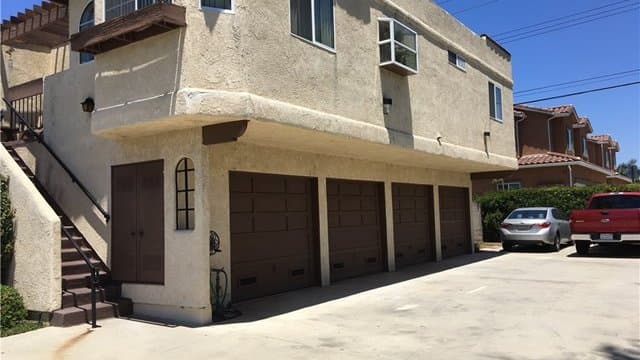
Investors considering a four-unit property usually ask one question first: what will it cost to keep this running? At 7781 15th St in Westminster, the rear 1987 triplex is the part of the property that tends to answer that question most favorably.
The units
The triplex contains three 2-bedroom, 2-bathroom units. Two full bathrooms per unit is a practical feature for rental housing. It makes the units more flexible for roommates, couples, and households of varying sizes, and it is a layout that renters in the area commonly look for.
All three units share the same basic floor plan configuration, which keeps leasing simple. When units are similar, one can compare rents, plan turns, and budget maintenance more easily.
Construction and mechanics
- Built in 1987. The triplex is nearly a century newer than the front house. Building methods and code requirements from the late 1980s differ meaningfully from those of the 1920s.
- Concrete slab foundation. Slab construction eliminates the crawlspace, so there is no underfloor area to inspect for moisture or pests in the same way.
- Central air conditioning and forced-air heating. In-unit climate control is a competitive amenity in Southern California rentals.
- Individual water heaters and laundry hookups. Each unit has its own, so tenants are not sharing equipment.
- Separate metering. The property has 5 electric and 4 gas meters across the four units.
Why this supports a lower-CapEx story
Capital expenditures, the big-ticket items like roofs, mechanical systems, and major repairs, drive much of the difference between a good-looking rent roll and a good-looking cash flow. A newer building with working mechanical systems does not eliminate those costs, but it tends to defer the most disruptive ones compared with a 1920s structure.
We will be careful here: age alone does not determine condition. Plan to verify roof age, plumbing materials, electrical panels, and HVAC equipment during inspection rather than relying on the year built. We will cover inspection readiness in a later article.
The income picture
The three triplex units currently produce $7,045 per month combined, which averages roughly $2,348 per unit. The pro forma assumes $9,200 per month combined, roughly $3,067 per unit. Reaching those rents depends on market conditions, unit condition, and lease timing. Two of the units have already been remodeled, which we will cover in the tours and upgrades phase.
Who this part of the property suits
- 1031 exchange investors who want a straightforward income stream and a manageable maintenance profile
- House hackers who want the rear units to help carry housing costs while living in the front house
- Value-add buyers who want newer construction as the foundation for rent growth
Common questions
Do all three units have the same finishes? Not necessarily. Two units have been remodeled, and one has not, so ask for a unit-by-unit condition summary and photos.
What is the biggest cost risk? For any building, it is usually the items you cannot see from the street: roof, plumbing supply and drain lines, electrical panels, and HVAC equipment. A licensed inspector can give you a clearer picture than the year built alone.
How should I budget? Many investors set aside an annual reserve per unit for repairs and replacements, then adjust it after inspection.
Key takeaways
- Three 2-bedroom, 2-bath units on a slab foundation make the triplex simple to lease and compare.
- Central air, forced-air heating, individual water heaters, and separate meters add to its operating appeal.
- Newer construction reduces some risks but does not remove the need to verify the roof, plumbing, electrical, and HVAC.
Next step
Before you evaluate the numbers, look at the floor plans and specifications. They show room sizes, layouts, and equipment in each unit and make it easier to judge the triplex against other properties you are considering.
Listed by Century Financial Group Corp. (Karen Luu). Figures reflect seller-provided information and are not guaranteed. Buyers should verify all details during due diligence. This article is general information, not tax, legal, or financial advice.